

Blog
Food & balance · 2 min read
A Balanced Plate for a Busy Life: Where Organic Fits In
Organic can be one part of your food choices. Variety, everyday meals and realistic habits still matter.
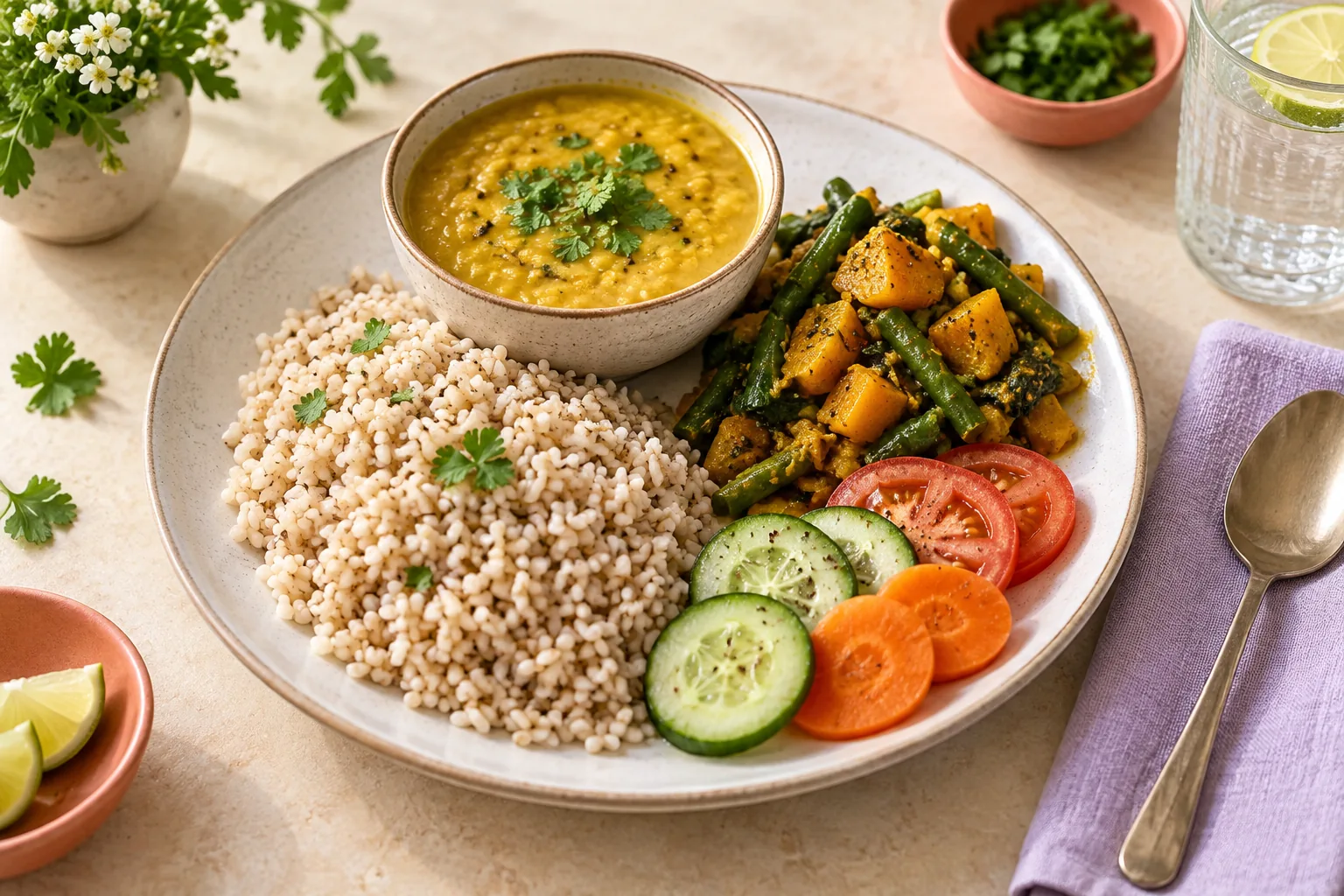
A good meal does not have to be a project
After work, family responsibilities or a long commute, dinner can feel like one more decision. Food advice often makes that decision harder by presenting an ideal plate that requires unusual ingredients, extra time and a different budget. A more helpful starting point is the meal you can actually prepare and enjoy today.
Think of familiar combinations: dal, rice and vegetables; a roti meal with a pulse preparation; or a grain bowl with chickpeas and seasonal produce. ICMR-NIN’s Dietary Guidelines for Indians and WHO’s healthy-diet guidance emphasise variety and an overall balanced pattern. An organic ingredient can fit within that pattern, but it does not make variety, portions or preparation irrelevant.

Give each ingredient a sensible job
A pulse can contribute to a substantial everyday meal. A grain or millet can form a familiar base. Vegetables bring variety to the plate, while spices help make the food enjoyable. You do not need every meal to contain a fashionable powder or a long list of “superfoods”. Choose ingredients for the role they play in the meal, not only for a headline on the front of the pack.
The organic label describes how a product meets an organic production standard. It does not turn sugar into an unlimited food or make an unbalanced eating pattern balanced. A sweetened organic product still deserves a look at its ingredients and nutrition information. Equally, a useful meal does not become worthless because every ingredient is not organic. Avoid turning shopping choices into a test of how much someone cares for their family.
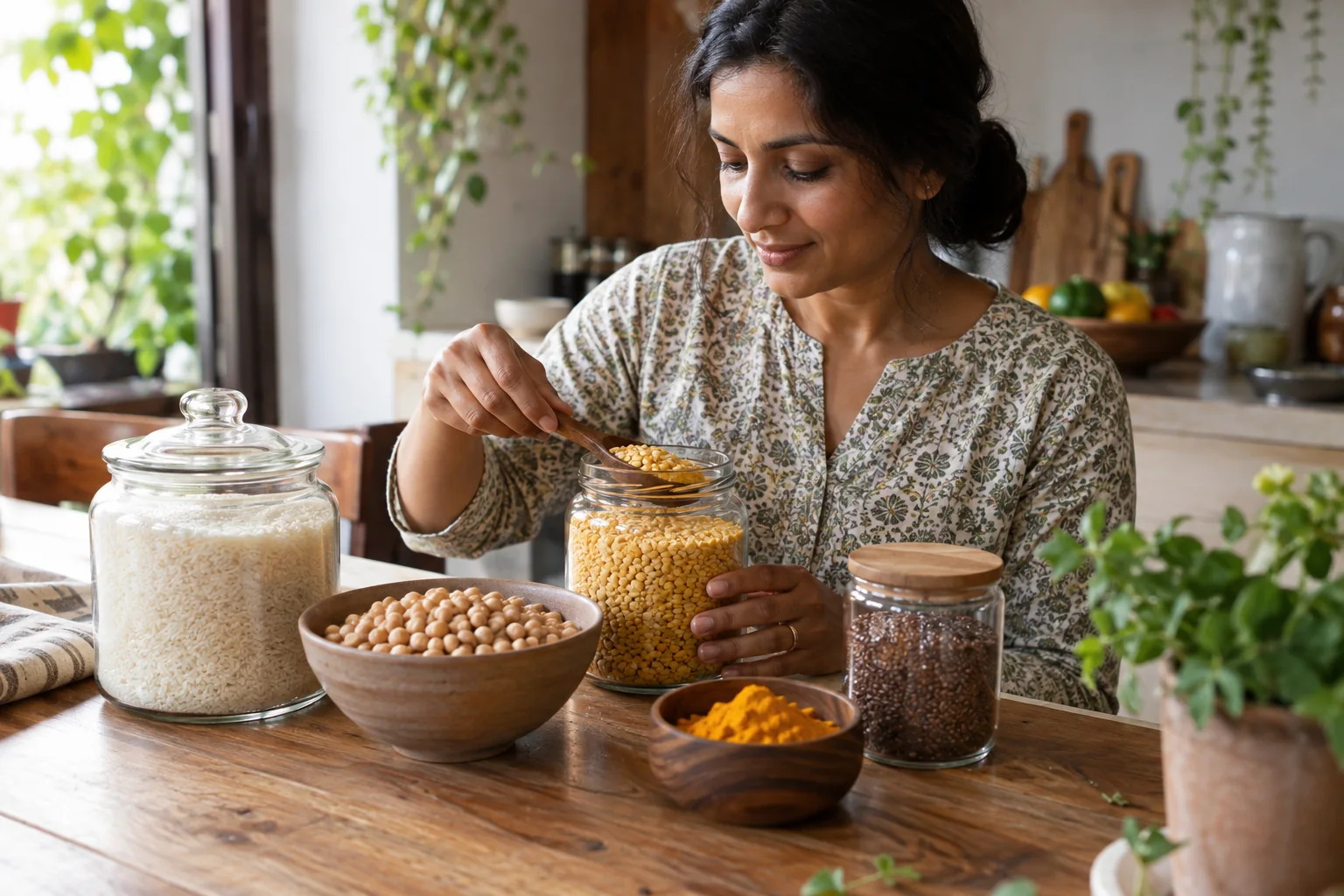
Build a rhythm that leaves room for real life
Plan a few flexible meals instead of an elaborate seven-day schedule. Keep a pulse you know how to cook, a grain your household enjoys and a small selection of regularly used spices. Add fresh foods around that base. Share the preparation where possible, and use convenience thoughtfully when time is limited. Familiarity can make a balanced routine easier to maintain.
Explore Root2Leaf’s moong, chickpeas or ragi products as ingredients, not as treatments or shortcuts. Check the pack and choose forms that suit your cooking. Personal needs can differ during pregnancy, illness, childhood or other circumstances; a qualified professional can help when individual advice is needed. For everyday inspiration, let the guiding question be simple: does this choice help us eat a varied, enjoyable meal we can keep making? That is a more useful goal than chasing a perfect pantry.
Choose an eating pattern you can sustain; no single ingredient has to carry the whole plate.
Reading & editorial references
- ICMR–National Institute of Nutrition. Dietary Guidelines for Indians. 2024.
- World Health Organization. Healthy diet. Updated January 2026.
Keep your curiosity growing.
All stories ↗
Start With What You Eat Most: Building an Organic Pantry One Staple at a Time
Build an organic pantry gradually around the rice, dal, spices and other foods your household already enjoys.
Read the story
Does Organic Automatically Mean Safe? What Every Buyer Should Know
Understand what organic certification tells you—and why safe storage, clean preparation and label checks still matter.
Read the story
Is Organic Always Expensive? Let’s Compare the Cost Per Meal
Compare pack size, usable portions, delivery charges and waste to decide whether an organic staple offers value for your household.
Read the story