

Blog
Know your food · 2 min read
Five Minutes With the Label: A Smarter Way to Choose Your Pantry Staples
Look beyond the front of the pack: compare identity, ingredients, quantity, nutrition, dates and practical storage information.
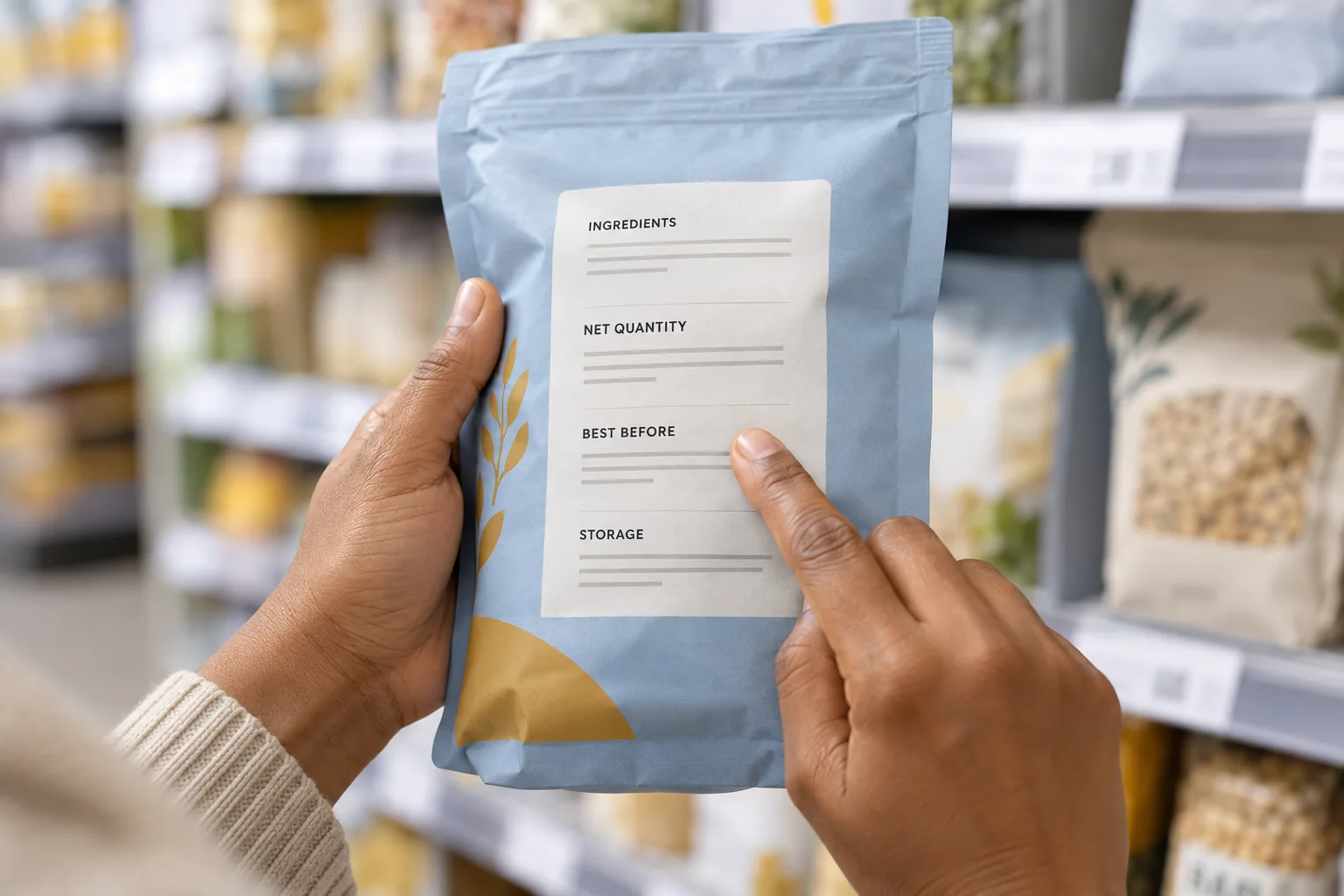
Start with what the food actually is
The front of a packet has a busy job: attract attention, communicate a flavour and make the brand memorable. Your job as a buyer is a little different. You need to know whether the product is the ingredient you expected and whether it fits the meal, budget and household you are buying for.
Start with the product identity and form. Whole cumin and cumin powder are related ingredients, but they are not identical choices in a recipe. A single-ingredient spice and a seasoning blend also deserve different expectations. Read the ingredient list where provided and look for information that matters to you, including allergens. If an online photograph does not make the label readable, ask the brand for the relevant details.

Compare on a consistent basis
Check the net quantity before comparing prices. Look at nutrition information on the same basis, such as per 100 grams, where it is available and appropriate. Do not compare one product’s tiny suggested serving with another product’s larger serving and assume the smaller number means a better food. A cooking ingredient also needs to be considered in the quantity and context in which you use it.
Treat words such as “natural”, “premium” and “traditional” as prompts to learn more, not substitutes for the rest of the label. For an organic purchase, check the applicable certification information rather than choosing by colour or farm imagery alone. You do not have to memorise every regulation to develop a useful habit of looking for clear, specific information.

Finish with the details that matter at home
Review the date information, batch reference, storage directions and manufacturer or customer-care details. Think about how long you are likely to keep the ingredient after opening and whether you have suitable storage. These practical checks can be especially useful when considering a larger pack or an unfamiliar product.
Make a short routine of it: identity, ingredients, quantity, relevant nutrition information, dates and storage. This is a shopping checklist, not an exhaustive legal compliance test. On Root2Leaf, use the product page to shortlist your choice and check the actual pack when it arrives. If the page and pack seem inconsistent, ask before using the product. Clear information should make shopping feel calmer, not more complicated. A few attentive minutes can help you buy an ingredient for what it is, instead of buying only the impression created by its packaging.
Turn the pack around. The most useful buying details are often away from the headline.
Reading & editorial references
- Food Safety and Standards Authority of India. Organic Food: consumer guidance on organic identification.
- Editorial buying checklist: product identity, quantities, label information and storage.
Keep your curiosity growing.
All stories ↗
Start With What You Eat Most: Building an Organic Pantry One Staple at a Time
Build an organic pantry gradually around the rice, dal, spices and other foods your household already enjoys.
Read the story
A Balanced Plate for a Busy Life: Where Organic Fits In
Organic can be one part of your food choices. Variety, everyday meals and realistic habits still matter.
Read the story
Does Organic Automatically Mean Safe? What Every Buyer Should Know
Understand what organic certification tells you—and why safe storage, clean preparation and label checks still matter.
Read the story